

Celebrated as the start of the summer vacation season, Memorial Day is arguably better known for shopping sales, hot dogs, and beach parties than as a serious day of remembrance for the fallen. Yet that is exactly how it got its start, and why it is celebrated today. Yet, like many other American traditions, the origins of Memorial Day are shrouded in myths and legends. Here are 7 things you might not know about Memorial Day.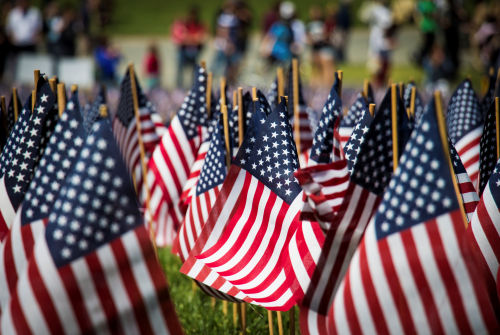
1. The Civil War
What would eventually become Memorial Day actually got its start in the aftermath of the Civil War. With an unprecedented 620,000 fallen on both sides, individuals and communities wanted to do something to honor their dead. Spontaneous celebrations began popping up across the country during the late 1860s, focusing on bringing fresh flowers, wreaths, and flags to the gravesites. The festive nature of these grave displays earned the holiday the moniker, “Decoration Day.” The name gradually evolved to Memorial Day.
2. Confederate Memorial Day
According to some sources, Confederate veterans were the first to turn their day of remembrance into an official holiday. In 1866, the Ladies Memorial Association of Columbus, Georgia, voted to create an official day of remembrance, and asked all of the Southern states to participate. Although the Association selected April 26, the anniversary of the Confederate surrender to Union General Sherman, some states chose different dates instead.
As of 2016, eight states still celebrate Confederate Memorial Day. Georgia was the most recent state to discontinue the practice, announcing in August 2015 that the holiday would be removed from the state’s 2016 calendar.
3. General Logan
While Union veterans and survivors certainly participated in Decoration Day and Memorial Day celebrations, they did not have an official day of remembrance until two years after Confederate Memorial Day began. On May 5, 1868, Union General John A. Logan, by then head of a Union veterans’ organization, issued an official decree setting the date for Memorial Day as May 30. He chose that date because it was not the anniversary of any specific battle.
4. Universal Monday Holiday Act
After World War I, Memorial Day was expanded to honor the fallen of all wars. The date remained set as May 30 through the late 1960s, which meant that it could fall on any day of the week. In 1968, however, new legislation was passed to set the observance of certain federal holidays to Mondays, creating three day weekends.
Five then-existing holidays were affected, including Memorial Day (Martin Luther King, Jr. Day, established in 1983, follows the same guidelines). When the new law took effect in 1971, Memorial Day moved from May 30 to the last Monday in May.
5. National Moment of Remembrance
Following polls showing that only about 25% of Americans knew the significance of Memorial Day, President Clinton signed the National Moment of Remembrance Act in 2000. This calls on all Americans to observe a moment of remembrance at 3:00 p.m. each Memorial Day. Many organizations participate, including Major League Baseball and NASCAR. Amtrak trains blow their whistles in acknowledgment at that time.
6. Flag Regulations
On Memorial Day, flags across the United States are to be flown at half-staff until noon. This is enacted at all government buildings, and individual Americans are asked to participate as well.
7. Parades and Fireworks
Parades and professional fireworks displays have become a major part of many cities’ Memorial Day celebrations. They are an excellent way to honor the fallen while acknowledging that life must go on.
Like most American traditions, Memorial Day is a complex blend of the old and the new, the sacred and the commercial. This year, while you are kicking back in your backyard with friends and neighbors, lighting fireworks and cooking barbecue, take a few moments to give thanks to those who gave their lives to defend your freedom.
At Dynamite Fireworks, we don’t only sell top-quality, name-brand fireworks. We also provide the information you need to know to use them responsibly, legally, and safely. If you have any questions or concerns, give us a call at (219) 937-4090. We look forward to becoming your one-stop shop for all your fireworks needs!