
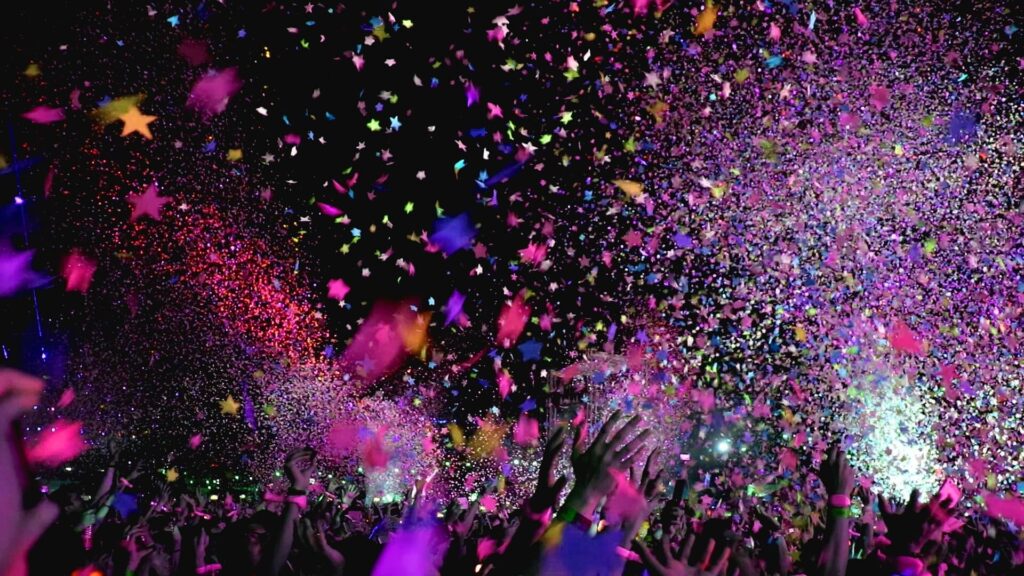
They light up the night sky in a dizzying array of colors, patterns, and sounds and explode with a delightful, core-shaking “BOOM!” trailed by firefly confetti sparkles that delight onlookers of all ages. These innocuous bombs bursting in air are fireworks, of course. Fourth of July, New Year’s Eve, parades, theme parks, and special events simply wouldn’t be the same without them! Fireworks turn any event into a celebration. Did you know that the word “firework” is derived from the Greek word, pyrotechnics, which means “fire art?” Probably not. There’s a lot you probably don’t know about fireworks. Let’s change that!

1: The First Fireworks Were Used for Protection
Many historians credit Chinese alchemists with inventing gunpowder and the first crude fireworks. Historians believe gunpowder, also known as “fire chemical,” was invented around A.D. 1,000. The Chinese experimented with their explosive creation, eventually stuffing it into hollow bamboo tubes. When the tubes were thrown into fire, they exploded with a large “Boom!”
These first rudimentary firecrackers quickly became staples at weddings, festivals, and other Chinese celebrations, but not for their beauty and entertainment value. The Chinese embraced firecrackers because they believed their loud explosions would scare away evil spirits.
A century later, the Chinese began using fireworks to protect against mortal evil. They stuffed hollow bamboo stalks with gunpowder, attached them to arrows, lit them on fire, and shot these explosive weapons at their enemies. Later, they tweaked their weaponry by placing rats inside the bamboo fire crackers and propelling them across enemy lines.
Credit the Italians for upgrading China’s crude firecrackers into the colorful, airborne versions we enjoy today. Italian pyrotechnicians invented cone-shaped aerial fireworks shells in the 1830s. Strategically packed with gunpowder, chemicals, and an inner bursting charge, these shells are lit and propelled into the sky to create the elaborate fireworks shows we’re used to today.
2. Americans Have Loved Fireworks Since the 1600s
Historians credit Capt. John Smith with setting off the first fireworks display in colonial America — way back in 1608, in Jamestown. Americans began marking Independence Day with fireworks shows in the 1770s. By the late 1890s, though, some American pranksters were becoming too enamored with fireworks, leading activists to form “The Society for the Suppression of Unnecessary Noise.” The Society lobbied for restrictions on the purchase of fireworks. Today, fireworks use is regulated at the state and local levels. Most people agree that fireworks are best enjoyed in moderation!
3: Fireworks Makers Use Chemicals as Their Color Palette
Black powder, also known as gunpowder, is the main component in all fireworks. It comprises 75% potassium nitrate, 15% charcoal, and 10% sulfur. Gunpowder additives layered within a fireworks shell turn a simple explosion into a magical kaleidoscope of colors.
When different metallic powders burn, they create different wavelengths of light: copper compounds burn blue, strontium and lithium compounds burn red, calcium salts burn orange, sodium salts burn yellow, barium compounds burns green, and aluminum, titanium, and magnesium burn silver.
Creating a firework is part art, part science. Fireworks makers can mix elements to create special colors: Strontium plus copper creates purple and chlorine plus copper creates turquoise, for example. The possibilities are endless!
4: Fireworks’ Sounds Aren’t Random
The audible component of fireworks — the whistles, booms, blasts, and hisses that accompany the colorful explosions — are crafted just as carefully as the visual component. Just as different elements create different colors, they also create different sounds. When you hear hisses and sizzles, you’re actually hearing aluminum or iron burning. Thank titanium powder for fireworks’ loud booms. The high-pitched whistling sound characteristic of most fireworks is created by gas released when each layer of flammable material burns.
5: Environmentally Friendlier Fireworks May Soon Be Available
They are undoubtedly beautiful to behold, but those canisters of pyrotechnical wizardry are packed with chemicals, such as barium and perchlorates, that can harm humans if ingested. While it’s true that the risk of accidentally ingesting perchlorates while enjoying a fireworks show are probably miniscule, there could be feasible exposure risks for those artistic geniuses who handle these chemicals to create the fireworks we so enjoy.
Army scientists are researching effective replacements for hazardous materials used in military pyrotechnics (flares.) What they learn could be used by fireworks makers to green up their products. So far, substitutions including sodium and potassium periodate, Nitrocellulose, and other elements rich in nitrogen are showing promise. The great news is that eco-friendlier fireworks are just as bright and dazzling as the original formulas!
Next time you gaze with wonder at the night sky ablaze with twinkling stars, bursts of rainbow brilliance, and pops, whistles, and hisses, what you’re seeing and hearing may be a bit less mysterious. It will be no less magical!